
2024-10-06
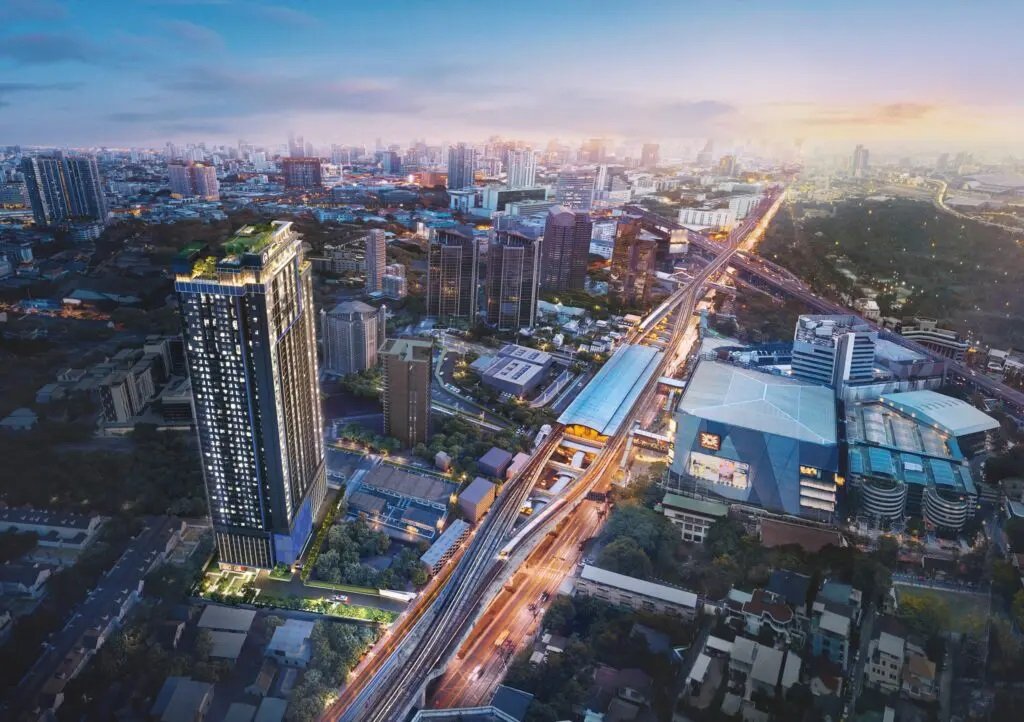
Rama 9’s 15-Minute “Golden Living Circle”: An In-Depth Analysis of the Appeal and Value of Rama 9 in Bangkok
十五分鐘Rama 9黃金生活圈:曼谷Rama 9兼具新興商務區與房地產的成長潛力,Rama 9不僅滿足生活品質需求,更具…

Are you thinking of buying a home in Thailand but worried about running into problems because you’re unfamiliar with local laws and the purchasing process? In recent years, Thailand’s real estate market has attracted many foreigners to buy property there, thanks to advantages such as low total prices, high returns on investment, and a thriving tourism industry. However, purchasing property in another country involves entirely different legal systems and tax regulations. Without doing your homework, it’s easy to fall into traps such as stalled pre-sale projects or unclear property titles. Therefore, if you’re thinking of buying a home in Thailand, we recommend reading the following guide first—let us walk you through the key considerations before making a purchase!
Thai law (particularly the Land Act and the Condominium Act) imposes certain restrictions on foreigners purchasing property in Thailand; therefore, if you wish to buy a home in Thailand, you should first be aware of the following three key points.
Under Thai law, foreigners cannot directly purchase and own “land” in Thailand in their own names. In other words, foreigners cannot directly obtain a permanent title deed for common types of properties such as detached houses, villas, townhouses, or bare land. If you truly wish to purchase a detached house or villa, you must typically opt for a “long-term leasehold” or hold the property indirectly through a legally registered Thai company; however, the latter option may also be subject to strict scrutiny by the Thai government.
Although foreigners cannot directly purchase freehold title to properties such as detached houses or villas, they can obtain freehold title by purchasing a condominium (Condo). However, this is subject to one condition: the proportion of the total saleable floor area in the condominium building held by foreigners cannot exceed 49%; the remaining 51% must be reserved for Thai nationals. Therefore, when purchasing a resale or new-construction property, be sure to ask the real estate agent or developer to confirm whether the specific unit still falls within the 49% limit. If it exceeds this limit, it may affect your eligibility to obtain title!
The Thai government requires that all funds used by foreigners to purchase real estate must be transferred from outside Thailand in foreign currency (typically U.S. dollars) to a local Thai bank, and the transfer must be made from the purchaser’s own account. Once the funds have been transferred to Thailand, the buyer must apply to the bank for a FET (Foreign Exchange Transaction) in order to successfully complete the subsequent procedures and obtain the property title deed.
What exactly is the “perpetual title” mentioned earlier? And what is “leasehold title”? When buying a home in Thailand, the type of title can affect your legal rights and the potential for your property to appreciate in value, so it’s essential to understand exactly which type you’re purchasing!
Perpetual ownership means that the buyer retains lifetime ownership of the property, is free to buy, sell, or transfer it, and can pass it on to the next generation without facing any risk of the contract expiring; the benefits of capital appreciation are fully retained.
The concept of leasehold property is similar to a long-term lease or a surface rights agreement. Under Thai law, the maximum legal lease term that can be registered at one time is 30 years, and it may be renewed twice. Although many developers promise in their contracts that the lease can be renewed for “30+30+30 years (for a total of 90 years),” it is important to note that only the first 30 years are legally guaranteed. Subsequent renewals are based on commercial contractual commitments and carry the risk that the developer may go bankrupt or the land may change hands, making it impossible to fulfill the agreement.
Therefore, unless the property is located in an exceptionally prime, central area that is not open to the public and offers freehold titles (such as certain royal land development projects in Bangkok), it is strongly recommended that foreigners prioritize apartments with freehold titles, as this provides the greatest protection for their assets.

If you’ve decided to buy a home in Thailand, what should you do? Below is a simple 5-step guide to help you understand the process of buying a home in Thailand.
If you want to buy a home in Thailand, the first step is, of course, to find the right property. We recommend seeking assistance from a high-quality, reliable real estate agent, such as:New Lianjie International Real Estate...to help you find a home that meets your needs and assist you with the home-buying process.
After selecting a property you like, you need to verify the property’s title, registration information, payment terms, and the rights and obligations of both parties. When purchasing a pre-sale property, you will typically need to pay a deposit first (usually ranging from 50,000 to 100,000 baht) and then make subsequent payments—such as the down payment and final balance—in accordance with the established process. When purchasing a completed property, you must complete all payments within a specified timeframe as outlined in the sales contract.
▲ After receiving the purchase and sale agreement, it is recommended that you have a professional real estate agent or attorney review the terms to ensure that the closing date, breach of contract provisions, and cost-sharing arrangements are all in order before formally signing the contract.
Once you have confirmed the payment method, you can proceed with the wire transfer. Please note that when purchasing a property in Thailand—whether it is a pre-sale unit or a completed property—the payment must be wired to Thailand in a foreign currency (not Thai baht).
After the remittance is completed, you must apply to the bank for a Foreign Remittance Certificate (FET) to verify the source of the funds. If you are unable to provide this document, you will not be able to register the property title or complete the transfer process.
In the past, some buyers thought that simply “presenting a property purchase contract in Thailand” would be enough to open a bank account there, but in recent years, banks across Thailand have significantly tightened their anti-money laundering policies. Nowadays, banks will refuse to process account openings based solely on a property purchase contract or a tourist visa!
Currently, foreign nationals must hold a valid long-term visa (such as a Thailand Elite Visa/Privilege Card or a work visa) to successfully open a local bank account in Thailand. If you do not have a long-term visa, you must transfer the funds directly to the developer’s designated account, and the developer will apply for the FET certificate on your behalf to avoid funds being held up due to an inability to open an account.
If you are purchasing a newly constructed home, you must conduct a thorough home inspection after completion (it is recommended to hire a professional home inspection company). Once everything has been verified, both parties must go to the Land Registry Office to complete the property transfer registration and pay the applicable taxes and fees before you can officially receive the property title deed.
When buying a home in Thailand, in addition to the cost of the property itself, there are many taxes and fees to be aware of. Let’s break this down into three stages: purchase, ownership, and sale:
| Stage | Fees/Tax Items | Rates and Calculation Bases | Primary Payer | Remark |
|---|---|---|---|---|
| Buy | Transfer Fee | 2%, as appraised by the Land Administration Bureau | Buyers and sellers typically split the difference (1% each). | Typically, the buyer and seller agree on how to allocate the costs in the contract. |
| Water and Electricity Meter Installation and Deposit | Based on the actual fees for each item (approximately 5,000 baht or less) | Buyer | One-time fee | |
| Hold | Community Management Fees | It depends on each community. | Buyer (Homeowner) | Pay once a year |
| Land and Property Tax | Announced Present Value: 0.021 TP3T | Buyer (Homeowner) | Pay once a year | |
| For Sale | Special Business Tax | 3.3%, as appraised by the Land Administration Bureau | Seller | Tax is levied when the property has been held for less than 5 years |
| Stamp Tax | 0.51 TP3T, as appraised by the Land Bureau | Seller | This tax is levied when the property has been held for more than 5 years; if stamp tax is paid, the 3.31 TP3T special business tax is not required. | |
| Withholding of Individual Income Tax | Taxes are assessed based on the selling price at the time and the length of property ownership, in accordance with the personal income tax brackets established by the government. | Seller | Pay in full directly at the Land Office at the time of the transfer |
When choosing a property, many people pay close attention to the “return on investment,” but how is it calculated? Can you really earn the high returns advertised? Let us show you how to calculate your return on investment!
Return on Investment = (Total Annual Rental Income – Annual Management Fees – Taxes) ÷ Investment Cost × 100%
For example, if you purchase an apartment in Bangkok for a total price of 4 million baht and rent it out for 18,000 baht per month (annual income of 216,000 baht), but after deducting annual building management fees, taxes, and even costs associated with rental agency and property management services, the actual net return on investment typically falls between 3.51% and 3.81%. If a project claims to offer an exceptionally high rate of return, you should verify whether the calculation is based solely on rental income without deducting annual holding costs, or if there are other hidden pitfalls. Be sure to evaluate such opportunities carefully before investing.
Aside from the return on investment, what other risks are involved in buying a home in Thailand? Below, we’ve compiled a list of the three most common risks to keep in mind before making a purchase!
When buying a home in Thailand, many people choose to purchase off-plan properties. However, if they deal with small or medium-sized developers lacking sufficient financial resources, there is a high risk of construction delays, project halts, or even abandoned projects during economic fluctuations or when the developer’s cash flow dries up—all of which can result in significant losses for buyers. Therefore, when buying a home overseas, it is still advisable to choose a large developer with a good reputation to minimize this risk as much as possible.
Thai locals are very particular about location when buying resale homes. Combined with differences in the tax system—where a higher tax is levied on the sale of a property held for less than five years—the resale market in Thailand has significantly slower liquidity (the speed at which properties change hands) compared to the pre-sale market. Consequently, if you purchase in an area lacking international buyers or one without sufficient amenities and convenient transportation, you may face the dilemma of having to lower the price or endure a prolonged sales period when you eventually want to sell for a profit.
Try to choose local developers listed in Thailand that have a track record of successfully completing and handing over properties and don’t have too many negative reviews, such as SANSIRI, Noble, and AP Thailand. These companies launch and hand over a large number of projects each year, so there are plenty of examples to reference, which can help you avoid making a bad choice.
Are you thinking about buying a home in Thailand but worried about running into problems because you’re unfamiliar with local laws and the purchasing process? When taking your first step toward overseas property investment, what you need most isn’t blind courage, but a professional partner who understands the local market, regulations, and current conditions. At this point,New Lianjie International Real EstateIt's the perfect choice for you.
We fully understand the anxiety and unease that overseas buyers feel when faced with unfamiliar languages and legal environments, which is why we refuse to use exaggerated or misleading sales tactics. Instead, we maintain an open, transparent approach based on on-site research to carefully select for each client premium developments from Thailand’s top developers—projects located in prime areas with genuine appreciation potential—and provide you with professional consultation and services, giving you greater peace of mind when purchasing a home in Thailand!
Whether you're looking for the right property, learning about local laws and tax systems, or need help communicating with developers, New Lianjie International Real Estate can provide you with comprehensive services. So, if you're interested in buying a home in Thailand, please feel free toInquire Now, letNew Lianjie International Real EstateWe're here to help you make your dreams come true!