[Thailand Immigration Quick Guide] Essential Information Before Immigrating to Thailand: Visa Requirements and Cost of Living (Complete Summary)
A pleasant climate, friendly locals, affordable cuisine, coupled with a highly international living environment and cost-effective healthcare resources, have made immigration to Thailand a hot topic in recent years. However, before setting off to start a new life in Thailand, many people still have questions about how to stay legally and what the actual cost of living is like. Therefore, in the article below, we’ll provide a comprehensive overview of the appropriate visas for long-term residence in Thailand, the cost of living there, and the pros and cons—to help you prepare as thoroughly as possible before you go!
Is It Possible to Immigrate to Thailand? The Difference Between Long-Term Residence and Immigration
If you want to immigrate to Thailand, you first need to determine whether you truly want permanent residency and to “immigrate,” or if you simply want to live there legally for an extended period as a “long-term resident” to gain that experience. The requirements and differences between the two are as follows:
Long-term residence
Immigration
Definition
Have resided legally in the area for a considerable period of time
Obtain permanent residency or citizenship in that country
Conditions
By applying for an Elite Visa, Senior Citizen Visa, Long-Term Residence Visa, or similar, and renewing your visa regularly, you can live in Thailand long-term.
You must have held a nonimmigrant visa for at least 3 years before you can apply for a permanent resident visa.
Who is a good fit for immigration to Thailand?
Thailand’s diverse and inclusive social environment can meet the relocation needs of people at different stages of life, and the following four groups in particular are well-suited to choosing Thailand as their second home abroad!
✅ Retirees and seniors who plan ahead
Thailand boasts a wealth of natural scenery and a relaxed pace of life. Its healthcare services meet international standards, so there’s no need to worry about subpar care, and fees are reasonable. Combined with a relatively low cost of living, it’s the perfect destination for those looking to enjoy life to the fullest in retirement!
✅ Remote Workers and Digital Nomads
With the advent of the digital age, the number of remote workers and digital nomads is on the rise. Thailand’s living environment and cost of living are relatively attractive, and its infrastructure is well-developed, making it the top choice for many remote workers.
✅ Parents who prioritize their children’s international education
Thailand is home to numerous international schools with excellent educational resources (including the IB, British, and U.S. AP curricula), and tuition fees are more affordable than those for studying in Europe or the United States, making it a highly cost-effective stepping stone to an international education!
✅ Investors seeking overseas asset allocation
The Thai real estate market has continued to grow in recent years, and with property prices that are more affordable compared to other countries, it has become a target for many investors.
How to Choose a Thai Immigration Visa? A Comparison of 5 Long-Term Residency Options
If you want to live in Thailand legally for an extended period, you’ll need to choose the visa type that’s right for you. Below, we’ve compiled a list of the five most common long-term visa options in Thailand:
Officially promoted by the government, members can enjoy exclusive privileges and a high degree of flexibility simply by paying their membership fees.
5 years, 10 years, 15 years, 20 years
Pay a one-time membership fee (starting at 900,000 baht); there are no mandatory requirements regarding age, language, or insurance.
High-net-worth individuals, frequent business travelers, and immigrants who wish to avoid the constraints of cumbersome regulations
Long-Term VisaLong-Term Resident Visa (LTR Visa)
A high-end long-term residency visa introduced by the Thai government to attract top global talent and high-net-worth individuals
10 years
Must demonstrate a high personal income (at least $80,000 per year)
Affluent individuals worldwide, high-income retirees, and senior executives at multinational corporations
Smart VisaSMART Visa
To issue high-level technical visas for professionals in fields such as technology and innovation
Up to 4 years
Must be certified by a specific Thai government agency, be employed in the target industry, and meet a certain salary threshold
R&D professionals, senior engineers, and startup founders
Retirement VisaNon-immigrant O-A
Traditional Retirement and Relocation Plans
1 year(Must be renewed annually)
Applicants must be at least 50 years old and have 800,000 baht in a Thai bank account.
Retirees with limited budgets, who have reached the legal age, and who are willing to personally undergo the cumbersome annual review process
BOI Investment VisaNon-Immigrant IB
A visa issued to individuals who invest in Thailand and establish a business that meets the requirements of the Board of Investment (BOI)
3 months(After entering the country, you may apply to the Immigration Bureau to extend your stay for up to one year.)
A letter of approval from the BOI is required
Business owners who actually plan to do business and set up factories in Thailand and expand into the Southeast Asian market
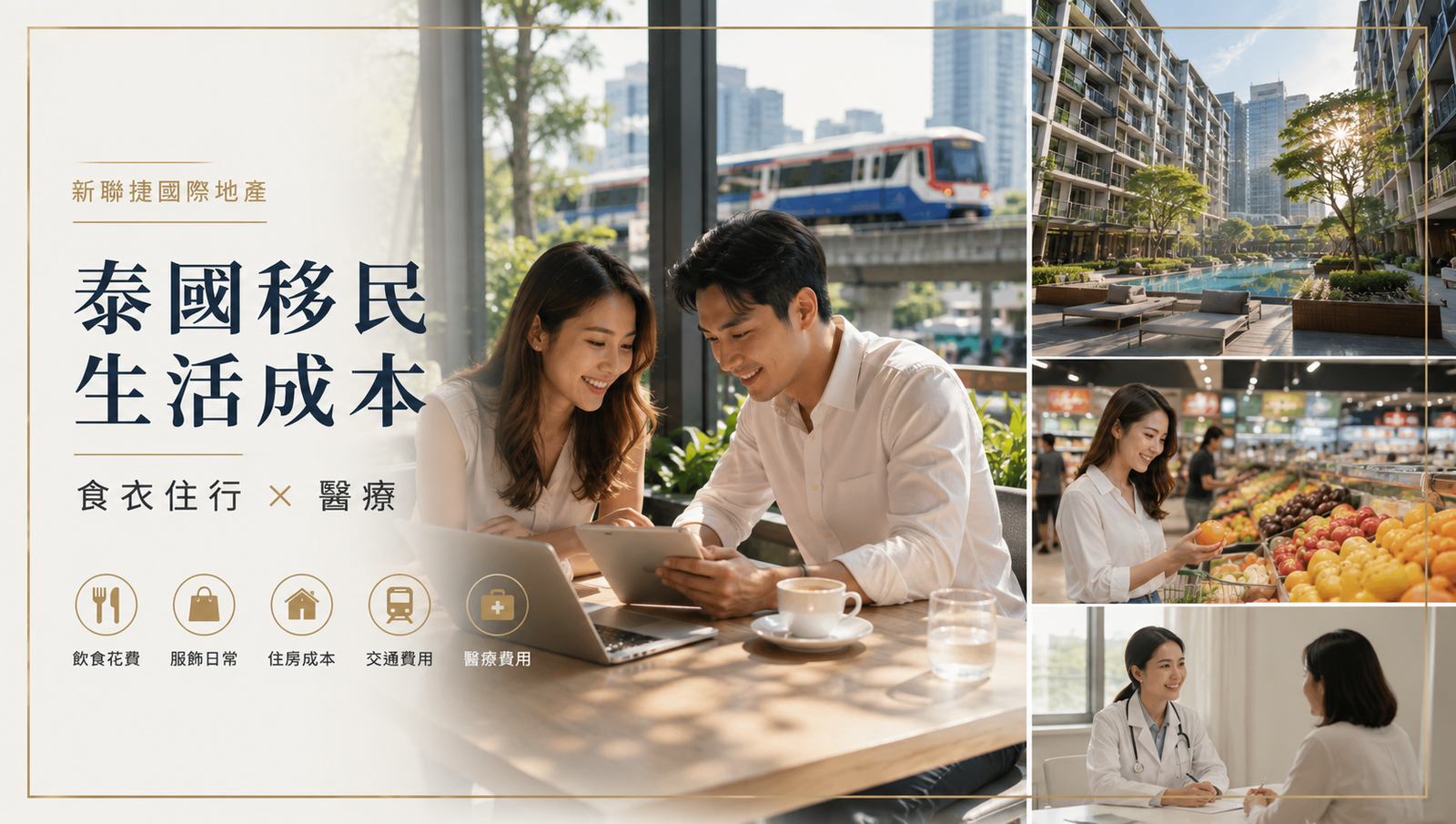
Is the Cost of Living High for Immigrants in Thailand? An Assessment of Food, Clothing, Housing, Transportation, and Medical Expenses
Want to move to Thailand but worried about the high cost of living? Actually, the cost of living in Thailand is relatively affordable compared to Northeast Asia or countries in Europe and the United States. Let’s take a look at the approximate costs of living in Thailand!
1. Food and Beverage Expenses
At street stalls or traditional markets in Thailand, you can have a meal for about 50 to 100 baht; At department store food courts or chain restaurants, the average cost per person is about 200–400 baht. However, if you prefer fine dining from around the world at Michelin-starred restaurants, the cost at Bangkok’s top restaurants may be comparable to that in Taipei.
2. Clothing and Daily Necessities
Thailand has a hot climate, and even in December, temperatures hover around the 20s. As a result, living here basically eliminates the need for expensive winter coats and clothing expenses—you can even pick up inexpensive outfits for just 100 to 300 baht! Prices for everyday items are also quite reasonable. You can shop at large supermarkets (such as Lotus’s and Big C) to pick up most of your daily necessities at affordable prices.
3. Housing and Transportation Costs
Rent varies depending on the area and type of housing. Taking Bangkok as an example, monthly rent for an apartment in the city center ranges from 8,000 to 15,000 baht; while a condo with comprehensive management and shared facilities typically costs between 15,000 and 50,000 baht per month.
As for transportation, if you take the BTS or MRT, a one-way fare ranges from 16 to 59 baht (depending on the number of stops); if you take a taxi, the starting fare is only 35 baht (but make sure the driver is using the meter properly!). ; As for buying a car, new cars cost approximately 600,000–2,000,000 baht, while used cars range from 100,000 to 1,000,000 baht. You can adjust your transportation budget based on your specific needs.
4. Assessment of International Medical Costs
Thailand’s healthcare quality ranks among the best in Asia. Although medical costs may be higher than in Taiwan, if you seek treatment at a private hospital, you’ll find not only excellent service and state-of-the-art facilities, but also medical staff who generally have strong foreign language skills, so communication shouldn’t be a major issue.
Pros and Cons of Living in Thailand: Climate, Cuisine, Healthcare, and Real Estate
In addition to the cost of living, it’s also very important to understand the pros and cons of living there before deciding to immigrate to Thailand. Let’s take a look at the pros and cons of living in Thailand!
Advantages of Living as an Expat in Thailand
Pleasant climate: Thailand has a tropical climate and is warm year-round, making it ideal for those who love the sun and the beach.
A wide variety of delicious foods: Thai cuisine offers a wide variety of dishes at affordable prices, allowing you to enjoy something different every day.
A well-developed healthcare system: Thailand offers high-quality medical care; its private hospitals are efficient, well-equipped with state-of-the-art facilities, and staffed by highly qualified doctors, ensuring you receive top-notch care when you’re sick.
The real estate market has great potential for growth.: The Thai real estate market continues to grow, and with relatively affordable prices, it is ideal for those looking to invest or purchase a home.
Extremely culturally inclusive: Thais are naturally optimistic and friendly; they are very open to foreign cultures and people, and the living environment is relatively safe.
Exceptional Value for Money in Daily Life: For a relatively affordable price, you can enjoy a high-quality living space along with exquisite dining and entertainment experiences.
Disadvantages of Living as an Expat in Thailand
The climate is hot and humid year-round.: Thailand’s climate is both an advantage and a disadvantage. Since it’s warm year-round, the only differences are between hot, very hot, and the rainy season. For those accustomed to distinct seasons or who enjoy snowy landscapes, it takes a long time to adjust.
Traffic Congestion: Bangkok's traffic congestion (especially during rush hour and when heavy rains cause flooding) is world-renowned, so people rely heavily on the BTS, MRT, tuk-tuks, or Grab to get around.
Frequently Asked Questions About Immigration to Thailand
Q1: Can immigrants in Thailand buy real estate?
It depends on the type of real estate you wish to purchase. Under Thai law, foreigners are not permitted to directly hold land ownership; therefore, if you wish to legally own a property with permanent title, the only option is to purchase a condominium unit (Condo), provided that the building complies with the restriction that foreign ownership may not exceed 49%. Stand-alone villas can generally only be bought and sold under a 30-year leasehold arrangement.
Q2: If I have the long-term visa mentioned above, can I work in Thailand?
You need a work visa to work in Thailand!
Q3: If I live in Thailand, can I get by without speaking any Thai at all?
In major cities (such as Bangkok, Pattaya, and Chiang Mai), due to the thriving tourism industry and high level of internationalization, English is widely spoken in shopping malls, hospitals, upscale restaurants, and apartment complexes, so you likely won’t have much trouble communicating. Additionally, Bangkok International Hospital provides Chinese interpreters, which is very convenient for us when visiting the doctor. However, learning some basic Thai vocabulary for everyday life will make your experience more convenient and welcoming when browsing traditional markets or taking taxis!
After purchasing property in Thailand, New Lianjie International Real Estate will assist you with all your real estate needs.
Deciding to move abroad is a major turning point in life. Once you’ve sorted out your visa and are ready to settle down in Thailand, you’ll need to choose a warm and safe home for yourself and your family. However, faced with a completely different language environment and real estate regulations—from selecting prime locations and interpreting developer contracts to processing international wire transfers and conducting detailed inspections upon handover— every step requires the guidance of a local expert to ensure that your bright hopes for relocation do not turn into a nightmare of cross-border disputes.
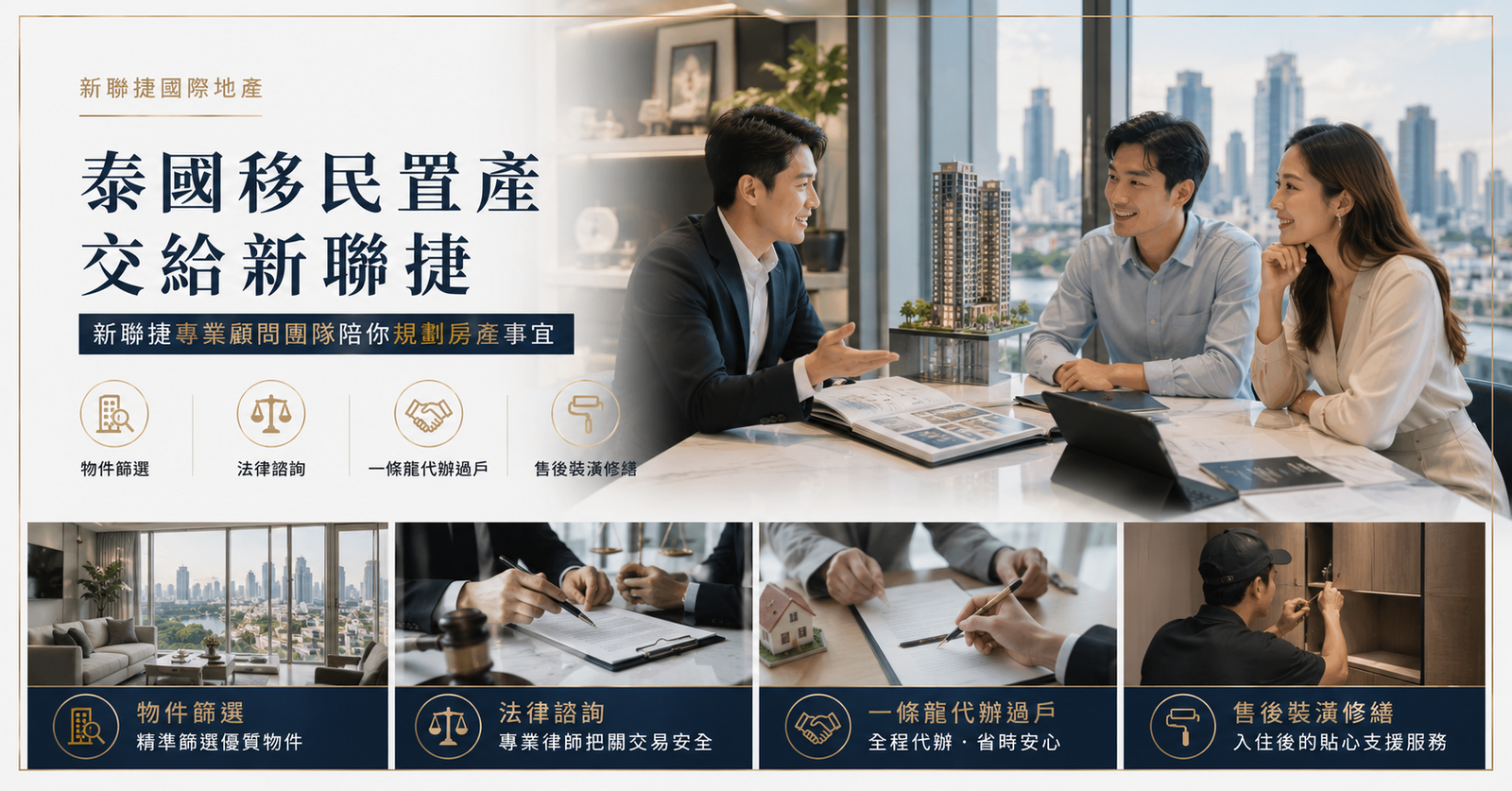
At this point, let’sNew Lianjie International Real EstateLet us help you and be your trusted real estate partner! With extensive experience in international real estate, we not only provide information on Thai properties but also have a professional team to offer market analysis and investment advice. Whether you’re looking for a modern freehold apartment with views of the Bangkok skyline or a home in a prime school district to ensure your children’s education, New Union’s team of professional consultants offers comprehensive, all-Chinese services—from property screening and legal consultation to one-stop title transfer assistance and post-purchase renovation and repair—to help you successfully purchase property in Thailand and start a whole new life!
So, if you have similar needs, go ahead andInquire Now, Contact us!
The Thailand Senior Citizen Visa, officially known as the “O-A” non-immigrant visa category (long-term stay), is designed specifically for foreign nationals aged 50 and older. The primary purpose of this visa is…
Bangkok International Schools have become a popular choice among Taiwanese parents due to their affordable tuition, diverse curricula, and proximity to Taiwan. This article summarizes tuition ranges, the application process, top schools, and key aspects of daily life to help you understand…
Are Thai property prices super cheap? Prices in prime areas of Bangkok are just 1/5 of those in Taipei! Thai property prices are calculated based on actual floor area, avoiding the issue of “common areas eating into usable space,” and low prices lead to higher rental returns! Great value for money…