

2024-10-20
Will Thai Casinos Boost Tourism? Is the Legalization of Thai Casinos Expected to Drive Demand in the Thai Real Estate Market?
泰國賭場合法化可能候選地:泰國曼谷、EEC極具潛力。若泰國賭場設立後將提升遊客1.5倍消費力及創造政府百億稅收,泰國賭場…

Thailand’s electric vehicle (EV) market is still in its early stages of development, but it has the potential for significant growth in the future. The Thai government has set ambitious targets for the electrification of transportation in the coming years and has implemented various incentives and policies—such as excise tax exemptions—to support these goals. The country aims to produce 100% battery electric vehicles (BEVs) for domestic sales by 2035.
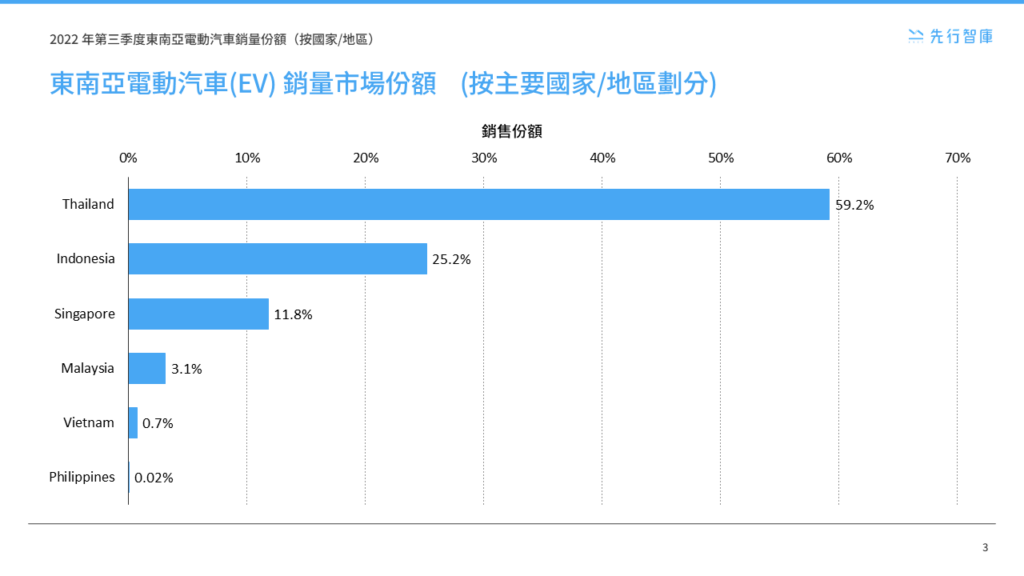
Thailand is a major hub for the production and assembly of internal combustion engine vehicles in Southeast Asia. The manufacturing sector is a major contributor to the country’s GDP; therefore, it is crucial for Thailand to maintain its position in the region. Although the region’s EV market remains relatively small, Thailand dominated the Southeast Asian EV market in terms of sales share as early as 2022, making it the most important market for EV manufacturers in the region. From 2018 to 2021, EV registrations in Thailand increased steadily, and the value of Thailand’s EV market is projected to nearly double by 2025.
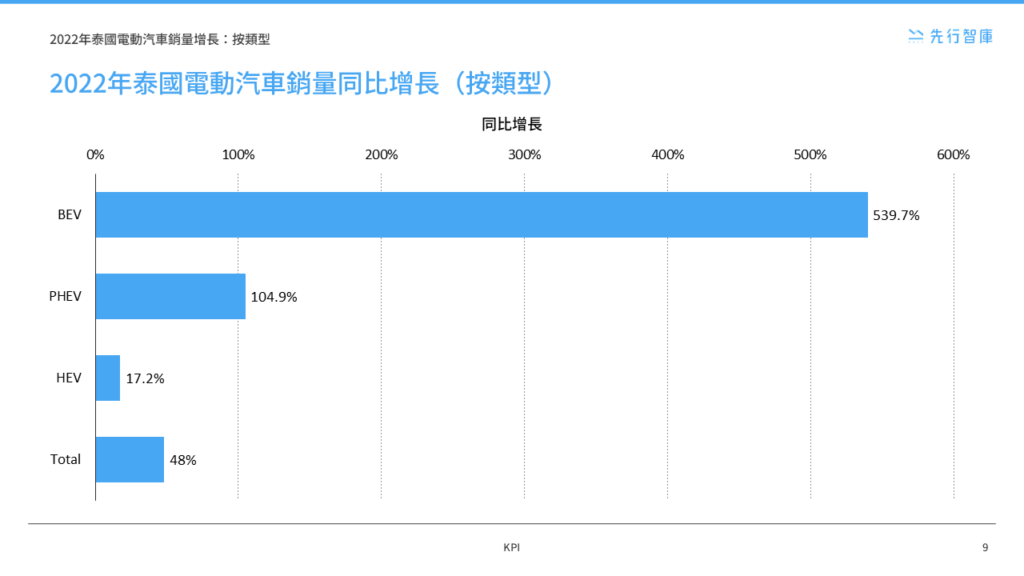
BEVs produce zero emissions, making them an attractive alternative to traditional gasoline and diesel vehicles. Compared to BEVs, hybrid electric vehicles (HEVs) have an internal combustion engine in addition to an electric motor. Currently, there are far more HEVs than BEVs on Thailand’s roads, as consumers remain concerned about the lack of charging stations nationwide. However, in 2022, BEV sales in Thailand grew at a much faster rate than HEV sales, increasing more than fivefold.
To successfully transition from a country that primarily relies on internal combustion engine (ICE) vehicles to one that primarily uses battery electric vehicles (BEVs), it is essential to develop a robust charging infrastructure. In 2022, Chinese original equipment manufacturers (OEMs) such as Great Wall Motors (GWM) and BYD launched new, affordable EV models, offering BEVs at prices that were highly competitive compared to the high-end models already on the market.
Thailand’s dominant position in the Southeast Asian electric vehicle market is evident. In the third quarter of 2022, its market share reached 59%, more than double that of its closest competitor. We should increase investment in the Thai market, particularly in marketing and brand building, to consolidate and expand our market share.
From 2016 to 2022, the market value experienced significant growth, rising from $500 million to $15.8 billion, demonstrating the market’s strong potential and growth momentum. Further investment should be made in market research and consumer demand analysis to better identify market trends and opportunities.

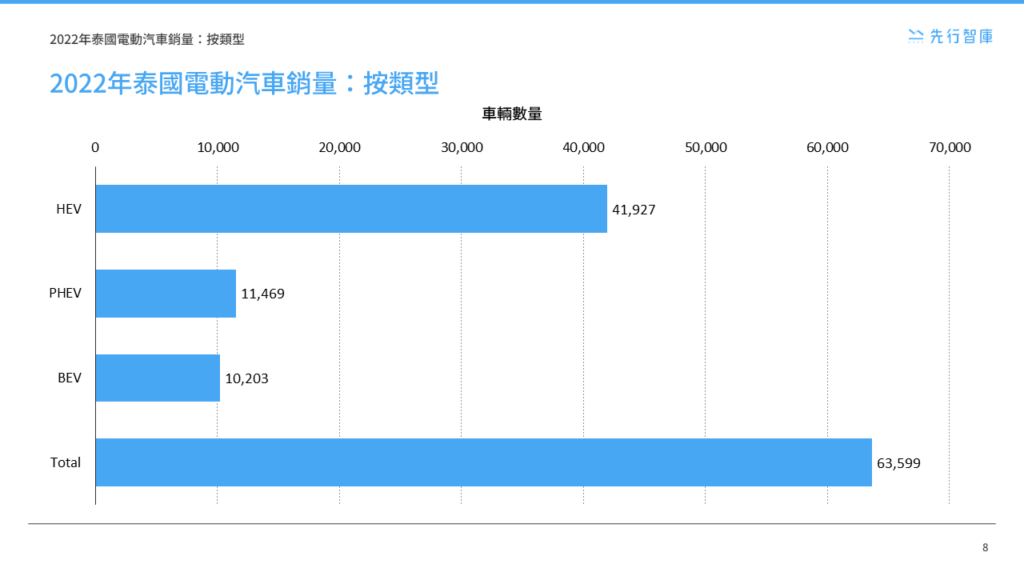
In 2022, HEVs accounted for a higher market share than BEVs and PHEVs, with sales reaching 41,927 units, while BEV sales totaled 10,203 units, indicating varying levels of market acceptance for different types of electric vehicles. Efforts should be made to increase the market visibility of BEVs and PHEVs and to balance sales distribution through policy support and marketing initiatives. Furthermore, in 2022, BEV sales grew by 5,391 TP3T year-over-year, demonstrating strong market interest and demand for pure electric vehicles. Investment in the BEV sector should be increased, and more innovative products developed to meet market demand.
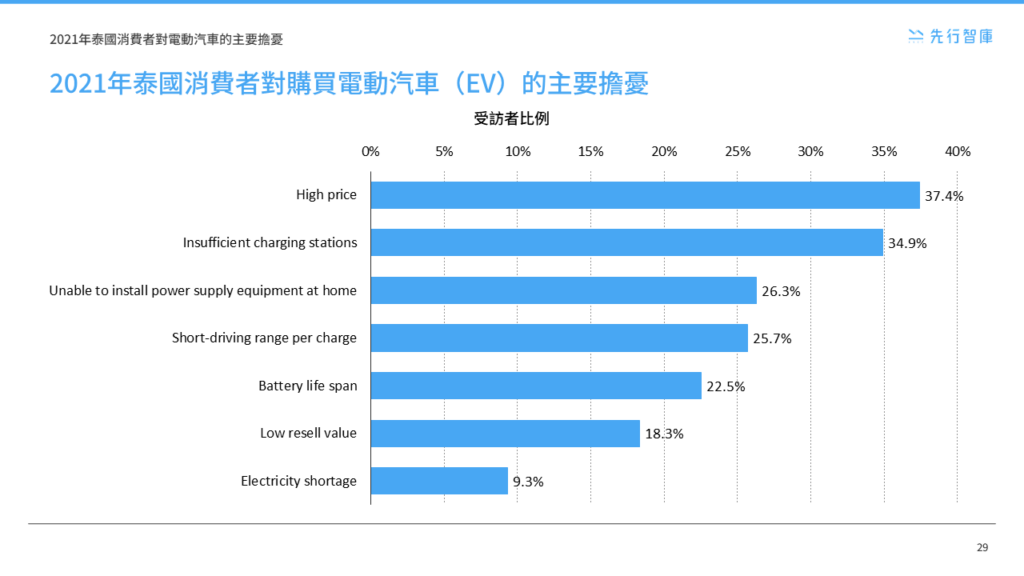
Key concerns include the high price of electric vehicles (37%) and insufficient charging infrastructure (35%), which could hinder market growth. These key consumer concerns can be addressed by lowering the price of electric vehicles and improving the charging infrastructure.
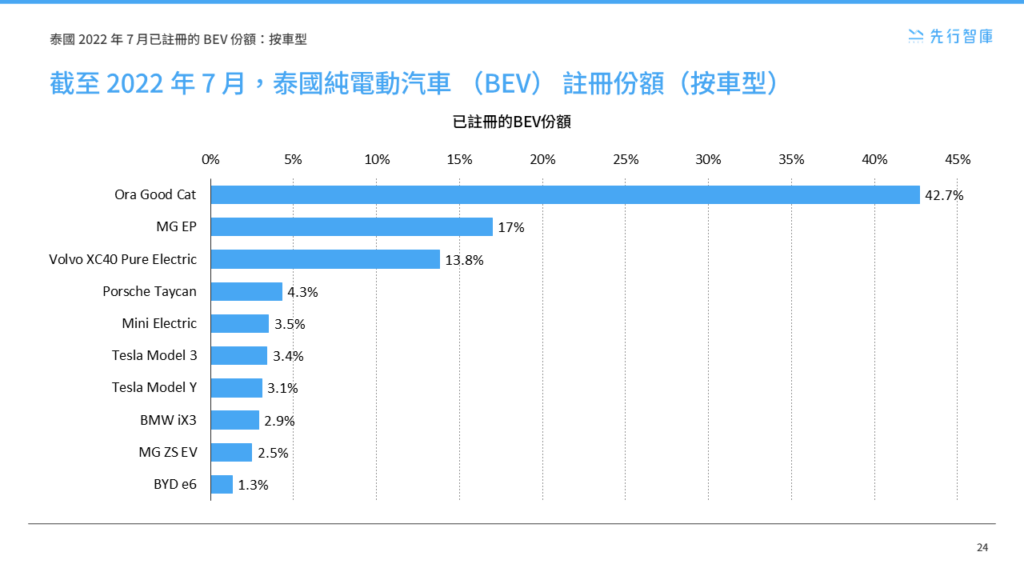
The Ora Good Cat holds a 42.7% market share and is the most popular BEV, followed by the MG EP (17%) and the Volvo XC40 Pure Electric (13.8%). You can conduct an in-depth analysis of the success factors of the market-leading models and adjust and optimize your product strategy based on these insights.
To help the company succeed in Thailand’s electric vehicle market, Xianxing Think Tank has proposed three key strategic actions:
Given the increasingly competitive electric vehicle market in Thailand, the company should enhance brand awareness through effective marketing strategies. This may include digital marketing, participating in industry trade shows, and collaborating with local partners. It is important to understand the specific needs and preferences of Thai consumers and to incorporate these factors into marketing campaigns. In addition, establishing a robust customer service and support system will help foster brand loyalty.
Given the demand for different types of electric vehicles in the Thai market, the company should consider launching a product lineup ranging from high-end to mid- and low-end models to cover various market segments. This includes developing more affordable models to attract price-sensitive consumers. At the same time, the company must pay attention to product performance and quality to ensure they meet local environmental and road conditions.
Given that the lack of charging infrastructure is a major barrier to the widespread adoption of electric vehicles, the company should actively collaborate with local governments, energy companies, and other relevant organizations to invest in the establishment and maintenance of a charging network. This includes installing fast-charging stations at key locations and providing charging solutions for homes and offices. At the same time, companies can consider providing technical and financial support for the construction of charging stations to accelerate the development of the infrastructure.
These strategic initiatives will help the company enter and expand its presence in Thailand’s electric vehicle market more effectively, while addressing current and future market challenges.